
Christian Horner Reflects on F1 Rivalry with Toto Wolff as 'Theatre'
Written with artificial intelligence.
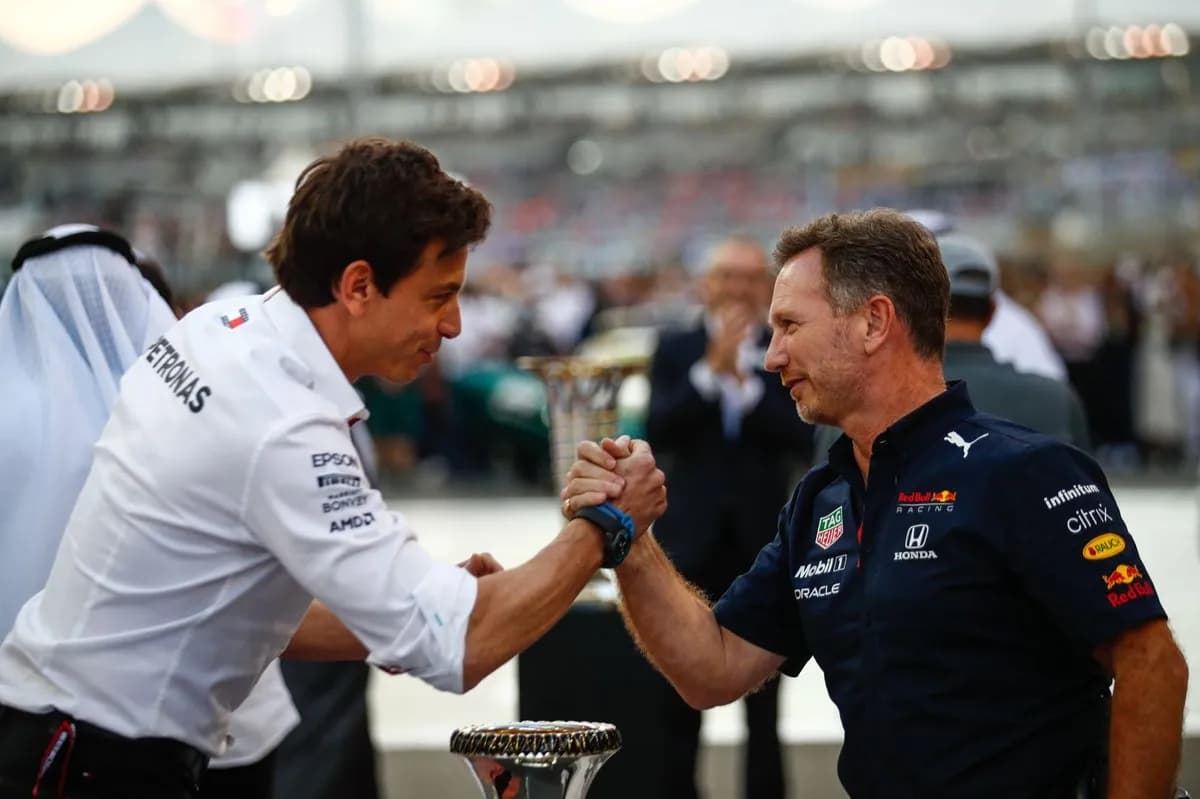
Christian Horner has acknowledged that his rivalry with Toto Wolff in Formula 1 became theatrical over the years, although he insists it remained authentic. Their competition, marked by intense battles for championships from 2010 to 2023, was heightened by the dramatic narratives captured in the Netflix series 'Drive to Survive'.
Acknowledging the Drama
Christian Horner, the Team Principal of Red Bull Racing, has admitted that his long-standing rivalry with Mercedes' Toto Wolff has taken on a theatrical quality. While Horner recognizes the dramatization, he emphasizes that the competition has always been genuine.
From 2010 to 2023, every Formula 1 title was claimed by either Wolff's Mercedes or Horner's Red Bull, fostering a naturally competitive relationship. This rivalry was frequently highlighted in the Netflix series 'Drive to Survive', particularly during heated moments like their argument over porpoising in 2022.
The Evolution of Rivalry
Horner noted that while the initial interactions were authentic, the presence of cameras led to a change in dynamics over time. He remarked, "As the seasons went on, there was considerably more male grooming and it became a little more theatre." Despite this, he maintained that the essence of their rivalry was real, as the editing of footage could portray individuals as either heroes or villains.

Historical Context
The rivalry peaked in 2021, when Red Bull's Max Verstappen and Mercedes' Lewis Hamilton were embroiled in a fierce battle for the drivers' championship, culminating in a contentious finale in Abu Dhabi. Horner expressed his respect for Wolff, acknowledging the competitive environment they created, which is essential for the sport's excitement and engagement.
Importance of Rivalries in Sports
Horner believes that rivalries are crucial for sports, stating, "It's good to have rivalry, so long as it doesn't spill over into personal." He compares their dynamic to historical rivalries in other sports, underscoring that such competition energizes teams and fans alike. Ultimately, he argues that the drive to succeed is what keeps teams striving for excellence in the highly competitive world of Formula 1.